
South-west Mull
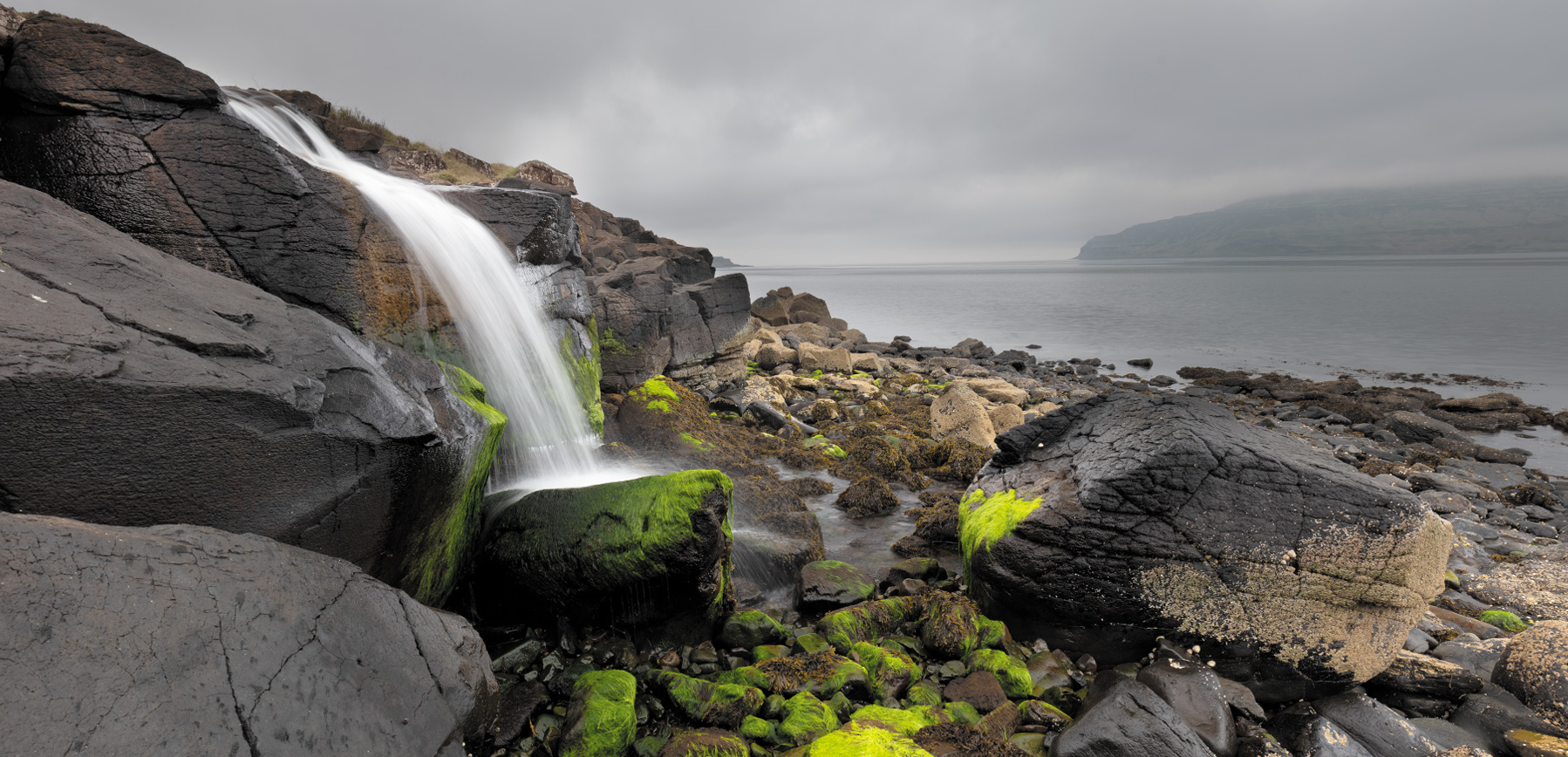
Waterfall, Ross of Mull
The Ross of Mull is the island’s largest peninsula, extending south-west from Mull’s heartland to the village of Fionnphort in the west. To the north Loch Scridain separates the Ross from Ardmeanach. To the south-east the basalt sea cliffs overlooking the Firth of Lorne give way to the gentler contours of granite in the west. The windswept moors and fertile grasslands are studded with the labours of past lives – from Neolithic monoliths and burial grounds to the ruins of many cleared villages.
A single road leads into the Ross from the heartland, the first half running alongside Loch Scridain before heading inland at Ardchrishnish. At the eastern end of Loch Scridain is the birdwatcher’s paradise of Loch Beg and the village of Pennyghael – home to Mull’s most distinctive milepost, the Pennyghael Pink. From Pennyghael, one of only two roads accessing the peninsula’s sparsely populated south coast branches off to Carsaig. The village of Bunessan is the Ross’s largest centre. Sitting at the head of Loch na Lathaich, it is home to the Ross of Mull Historical Centre – a rich repository of local knowledge, artefacts, and records housed in a cottage on the outskirts of the village beside the ruin of an old mill. A few kilometres south of Bunessan is Ardalanish Weavers. Set within a working farm and open to the public, they use only traditional looms and locally sourced fleeces. In the mid-19th century, on the headland to the east of the village, three layers of rare fossilised leaf mould were discovered embedded in the walls of a steep gully known in Gaelic as Slochd an Uruisg – the Pit of the Goblin!
Fionnphort, meaning Port of the White Sands, is the Ross’s second-largest settlement. It is the main departure point for visitors making the short crossing to Iona. North of the village is Tormore Quarry, from where the area’s distinctive pinky-red granite has been extracted for projects all over the world – from the Albert Memorial in London to the High Commissioner’s House in Wellington, New Zealand. Just inland from the village there is an small cranog (man-made islet) in the waters of Loch Poit na h-I, more commonly known as Loch Pottie. To the south is Fidden and the neighbouring tidal Isle of Erraid – the location of Robert Louis Stevenson’s novella The Merry Men and for part of his famous adventure story Kidnapped. Today the island is home to a small group of the Findhorn Foundation, dedicated to practising a spiritually aware, eco-friendly lifestyle.
The pale shell sand, turquoise shallows, and granite outcrops of the beach at Fionnphort are typical of the area. Some of the Ross’s best beaches are tucked away in small bays far from the road – the hidden jewel of Traigh Gheal on the south coast is the reward for a hard-going, boggy hike from the Ardalanish road end through the Tireragan Nature Reserve. Visiting the broad sweep of sand at Ardalanish requires nothing more than a short walk through farmland, and at neighbouring Uisken, the road takes you all the way to the beach.