
South-east Mull
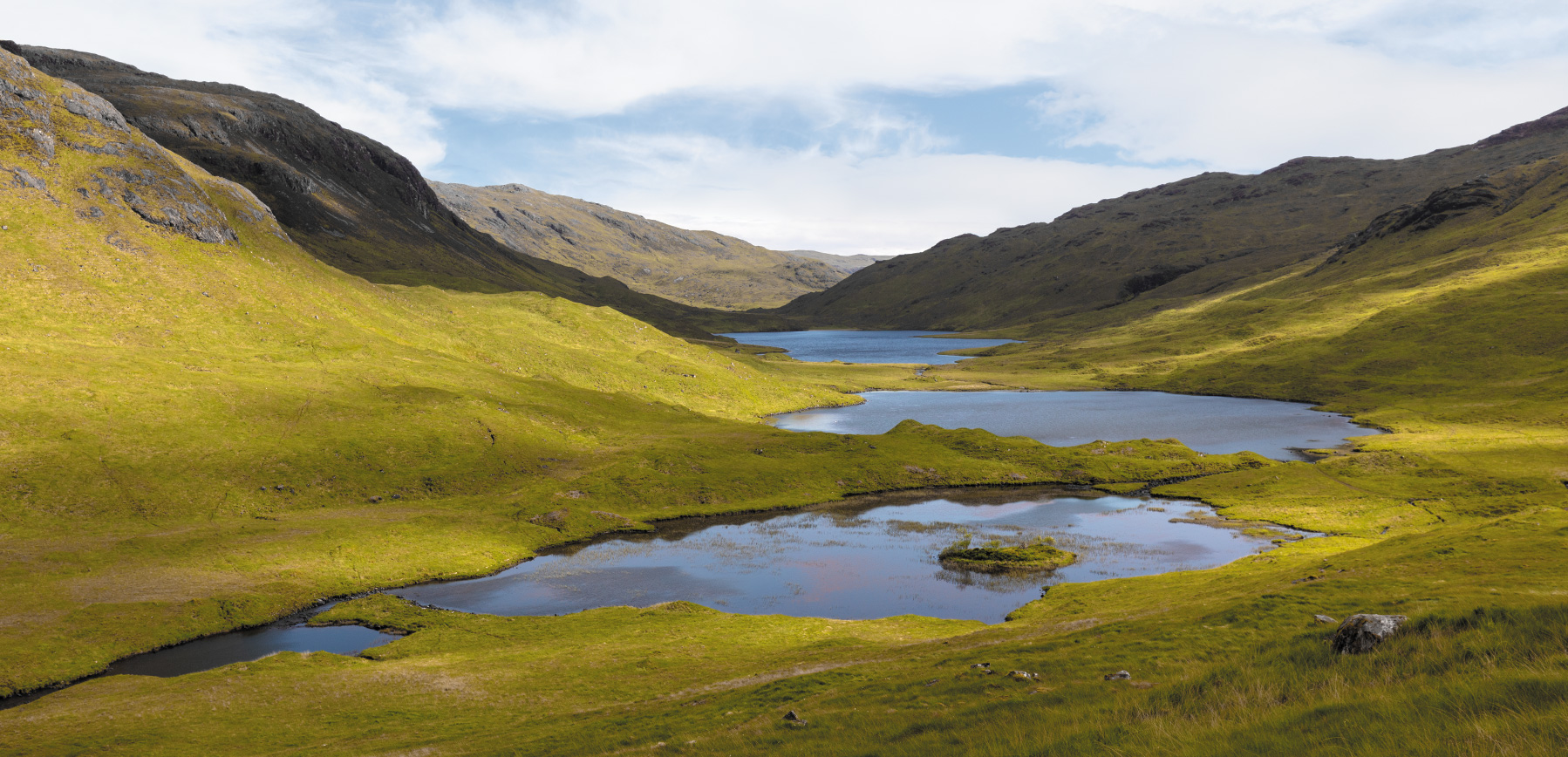
The Three Lochs, Glen More, Mull
Most visitors to Mull arrive at the port of Craignure in the south-east of the island. As the ferry from Oban approaches, it passes the stately Duart Castle sitting atop a rocky promontory and framed by the massive bulk of the island’s mountainous heartlands. Craignure sits below the slopes of the regenerating Scallastle Forest. To the south, the estuarial Loch Don spills into the Firth of Lorne. To the south-west, the large sea lochs of Loch Spelve and Loch Buie flank landlocked Loch Uisg.
In the past the area was often overlooked by visitors heading for Iona, but in recent years its various lochs and reputation as a wildlife hotspot have seen its popularity grow. As well as numerous raptors, waders, and seabirds, it is also a good place to see red and fallow deer, eagles, otters, and dolphins. Signs at Croggan and Loch Buie warn walkers to beware of adders! During the summer the endangered marsh fritillary moth can be spotted in the coastal grasslands around Loch Don.
At Lochbuie there is a circle of neolithic standing stones, as well as the remains of the 15th century Moy Castle and the 18th century Lochbuie House – both former seats of the MacLaines of Lochbuie. The nearby medieval chapel of Caibeal Mheamhair was rebuilt in the 18th century as the clan’s mausoleum. At the head of the loch the gently sloping sands of Laggan Beach are a favourite swimming spot for hardy souls brave enough to enter the chilly waters.
Overlooking the loch is the magnificent Ben Buie, whose steep, rocky slopes make the climb to the 717 metre summit disproportionately challenging. Following the northern shore of the loch, at low tide it is possible to walk all the way to Carsaig – on the way passing woodland, waterfalls, cliffs, caves, and the abandoned Glenbyre farmhouse.