
Fur, Feathers & Flippers
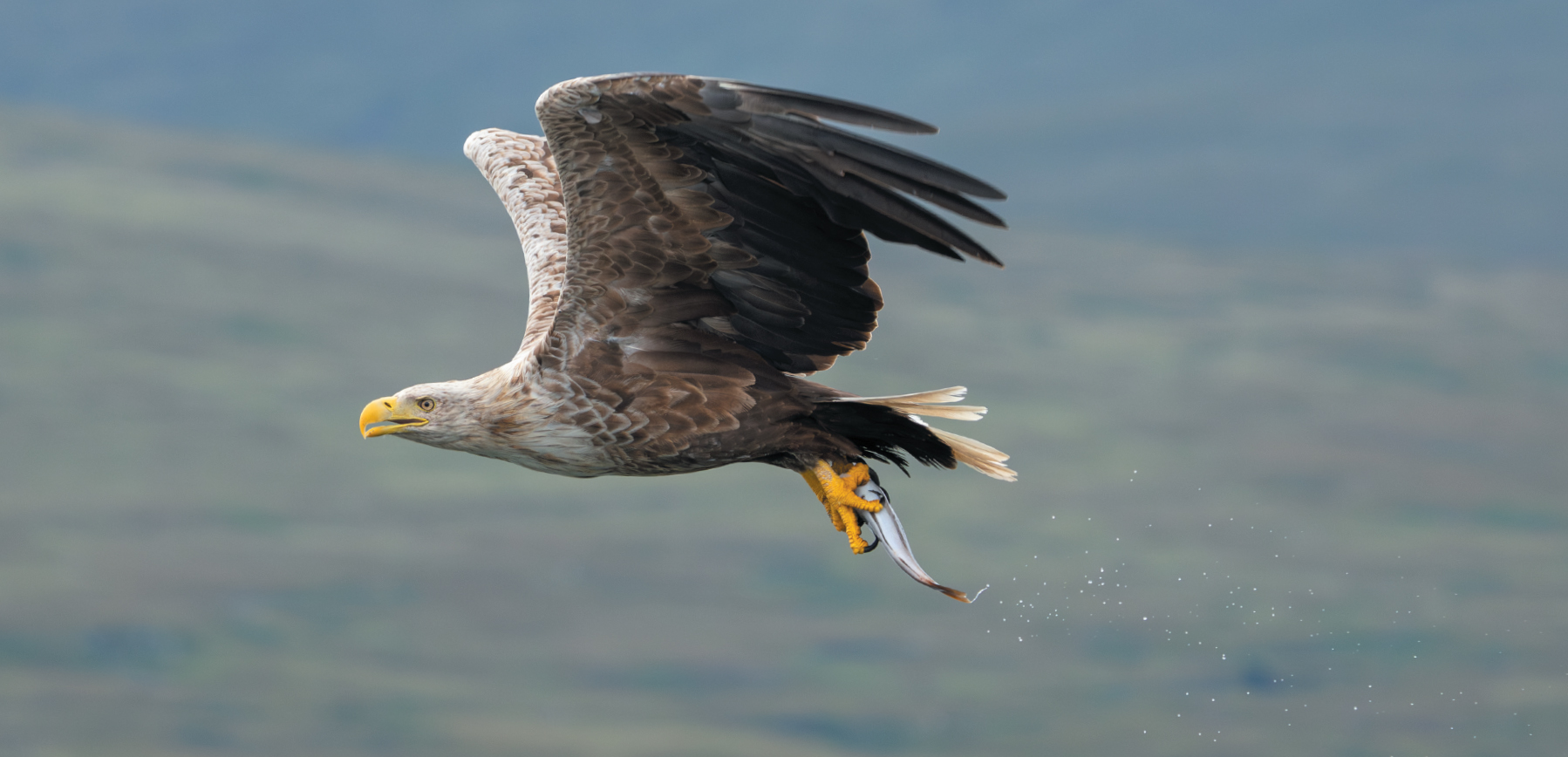
Sea Eagle, Isle of Mull
Eagle Island
The land, seas, and skies of Mull and the surrounding islands are a haven for British wildlife. Following the reintroduction of white-tailed eagles to Scotland in 1975, Mull has become the best place in the UK to see these formidable raptors, earning it the nickname Eagle Island. White-tailed eagles are Europe’s largest predatory birds with wingspans of up to 2.5 metres. They are a familiar sight around the coast and over the water – hunting for fish but also taking rabbits, hares, and other birds should the opportunity arise. Their slightly smaller but hugely powerful cousin the golden eagle also nests on Mull – patrolling the moors, bens, and glens looking for hares, rabbits, smaller birds, and carrion. Around Mull you may well see them soaring together and, during the summer breeding season, being mobbed by hooded crows and other feisty smaller birds. The eagles share the island’s skies with a host of other birds of prey including owls, peregrine falcons, kestrels, buzzards, hen-harriers, merlins, and migratory osprey.Marine Life
Foraging along the shoreline are resident red-breasted mergansers, herons, oystercatchers, curlews, and redshanks – with shags, cormorants, eiders, and shelducks seen in the coastal waters. Seasonal visitors include whimbrels, ringed plovers, and turnstones. The abundance of food in the waters around the islands attracts puffins, gannets, shearwaters, terns, guillemots, and razorbills. During spring and summer the moors are alive with the displays and squabbles of woodcocks and snipes, and the reedbeds resonate with the songs of sedge warblers and reed buntings.
A healthy population of Eurasian otters live around the shores and waterways, feasting on crustaceans and fish. Whilst Eurasian otters are normally nocturnal and riverine, Mull’s coastal population commonly feed on the incoming tide during daylight, causing some to mistake them for their North American sea otter relatives. Harbour (common) and Atlantic grey seals can be seen basking on the rocks and frolicking in the water – the greys tending to prefer the more remote locations. Resident harbour porpoises and bottlenose dolphins are joined in summer by pods of white-sided and common dolphins and occasionally orca. During summer basking sharks cruise the area, their prominent dorsal fins cutting though the water as they feed on plankton blooms. As the seas warm minke whales also visit to feed on plankton as well as herrings and sand eels – a diet that does nothing for their notoriously smelly breath, earning them the nickname ‘stinky minkes’!
Hooves and Antlers
During autumn the moors and hillsides resound with the bellowing of Britain’s largest wild land mammal – the red deer. They are common throughout Mull, generally feeding in the uplands during summer and lowlands over winter – including occasional forays to the coastline to supplement their diet with seaweed. Fallow deer can also be seen, mostly around Knock and Lochbuie. Tribes of impressively horned feral goats browse the more inaccessible slopes of the Ardmeanach Peninsula and Carsaig. Whilst not native they are considered naturalised, having been introduced by Neolithic farmers around 5,000 years ago.
Reptiles and Invertebrates
Adders, Scotland’s only native snake, can sometimes be spotted basking in the sun. Slow worms, which are in fact not worms at all but harmless legless lizards that can grow up to 500mm long, can also be found hiding in the shelter of the undergrowth.
Notable invertebrates include rare species of butterflies and moths, including the elusive slender Scotch burnet moth – found on just a few grassy, south-facing slopes on Mull and the Isle of Ulva and nowhere else in the world. During summer, brightly coloured dragonflies such as the gold-ringed and common hawker put on a showy display of aerial acrobatics.
Farmyards and Folds
Domesticated species adapted to the rigours of the Scottish climate include small but hardy black Hebridean sheep and the shaggy Highland cattle emblematic of Scotland. Whilst the collective noun for most cattle is a herd, for Highland cattle it is a ‘fold’ – after the protective stone structures they were traditionally overnighted in. Highland cattle are the oldest registered breed in the world, dating back to the 6th century. Originally the breed came in many colours but in modern times they are mostly ginger – allegedly the result of selective breeding that began after Queen Victoria expressed a preference for the red-coated variety.