
The Isle of Mull
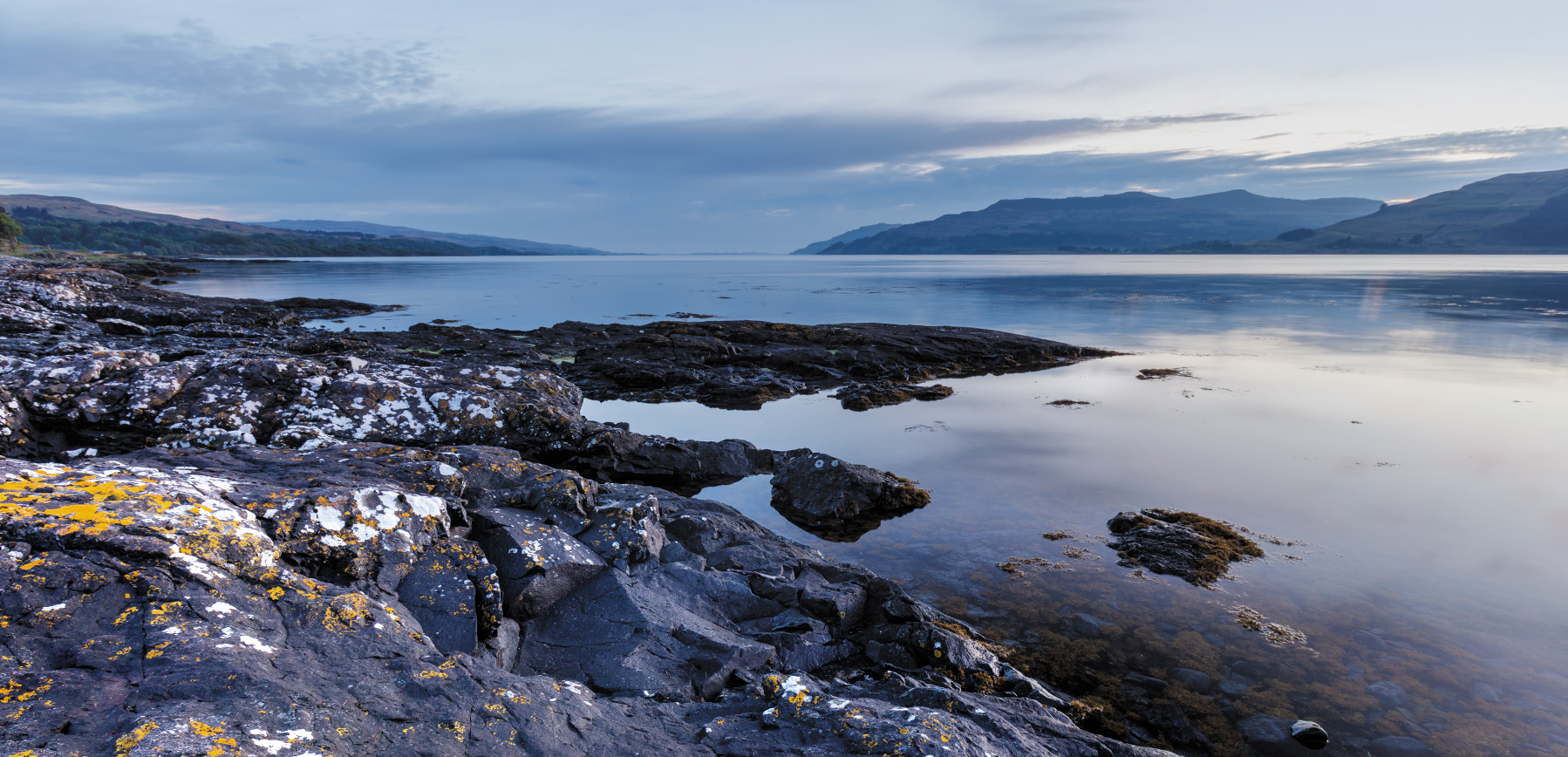
Loch Scridain
The Isle of Mull – or Muile as it is known in Gaelic – is the second-largest of the Inner Hebrides. The landscape is a mix of imposing bens, ice-carved glens, woodlands, wilderness, and wild moors, encircled by a near 500 kilometre coastline of towering cliffs, rocky headlands, and striking white-sand beaches. Over the summer months the resident population of around 3,000 swells as visitors come to enjoy the island’s beguiling scenery and reputation as one of the best places in the United Kingdom to see wildlife, particularly Eurasian otters and those monarchs of the sky – white-tailed eagles.
Separated from the mainland by the relatively narrow waters of the Sound of Mull and the Firth of Lorne, the island’s mountainous core is bound in the south-east by a series of freshwater and seawater lochs that are a continuation of the Great Glen that bisects Scotland. To the north and west, Mull’s peninsulas give way to the capricious waters of the North Atlantic and a scatter of closely associated islands – the most popular of which are Ulva, the Treshnish Isles, Staffa, and of course Iona. The exact origins and meanings of these placenames are often as arcane and disputed as their histories are long and bloody, but the cocktail of Gaelic, Norse, and English bears witness to the region’s many former rulers and turbulent past.
Mesolithic artefacts suggest that these islands’ human story began at least 7,500 years ago with seasonal hunter-gatherers. Around 6,000 years ago Neolithic farmers began to raise standing stones – becoming the first people to leave an enduring legacy – and since then numerous duns, burial chambers, castles, cairns, and the haunting ruins of cleared villages have all left their mark.
At 56° north, the main settlement of Tobermory sees only 7 hours of daylight in the depths of winter, but in midsummer, the sun stays above the horizon for nearly 18 hours and the skies never fully darken. Despite being at the same latitude as Southern Alaska, the climate remains relatively mild thanks to the moderating effect of the Gulf Stream delivering a current of warm water from the Mexican Gulf. Although the temperatures are not extreme, at any time of year the weather is likely to be changeable and storms rolling in from the Atlantic can be severe. On the upside, these restless skies are an integral part of the drama and beauty the Hebrides is famed for. Blanketing mists and stoating downpours are liable to clear to sparkling sunshine in the blink of an eye. Even when it’s overcast the light can be magical – breaks in the cloud sending beams of sunlight tracking over silvery lochs and searchlights chasing across the mountainsides.
Whilst the voyage from the mainland to Mull is short, the separation is enough to carry us to a place apart – a place where nature’s grandeur is played out in a major key, yet small enough to feel intimate. Journeying on and over the Sounds of Ulva and Iona takes us another step away from the noise of the wider world. Out on the uninhabited sanctuaries of Staffa and the Treshnish Isles, it all but disappears – giving way to a panorama of open seas, big skies, the timeless sound of the surf, and the plaintive calls of seabirds.